
Tattoos and Christianity: What Does Scripture Teach?
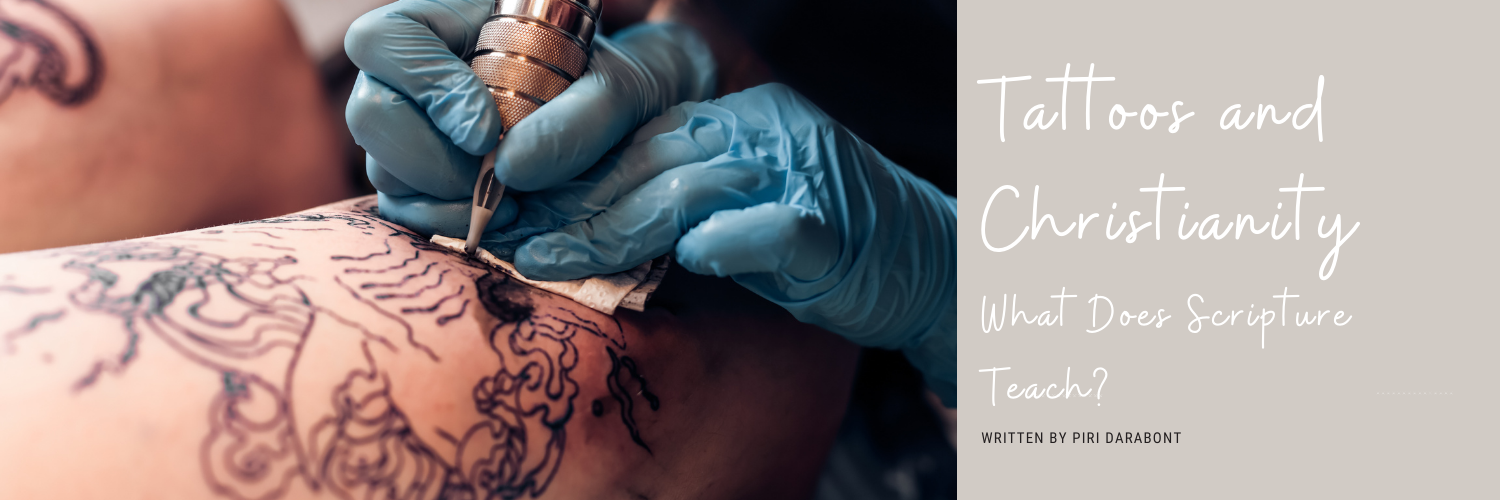
Many Christians today wrestle with an honest question:
If I love Jesus, does it matter if I have a tattoo?
In a culture where tattoos are widely accepted — even celebrated — this question is often brushed aside or answered emotionally rather than biblically.
Scripture tells us that our bodies matter deeply to God. They are not our own — they belong to Him. When we examine tattoos through the lens of Scripture rather than culture, we are forced to wrestle with passages many churches rarely teach.
To understand this issue clearly, we must set aside cultural norms and examine what God Himself has revealed in His Word.
What Scripture Says About Marking the Body
The Bible directly addresses the practice of marking the body:
“Do not cut your bodies for the dead or put tattoo marks on yourselves. I am the LORD.”
— Leviticus 19:28
This verse contains two distinct commands:
- A prohibition against cutting the body as part of mourning or worship
- A prohibition against placing marks (tattoos) on the body
In the ancient world, these practices were deeply tied to idolatry, pagan worship, and rituals meant to appease false gods or identify ownership by them. God commanded His people to remain separate — visibly and spiritually — from the nations around them.
While some argue that this command was only for Old Testament Israel, Scripture consistently reveals that God’s call to holiness and separation has not changed.
God’s Pattern: Separation From Pagan Practices
Throughout Scripture, God warns His people not to worship Him in the ways of the surrounding nations:
“You must not worship the LORD your God in their way.”
— Deuteronomy 12:4, 31
Tattoos, historically, were not expressions of personal creativity. They were:
- marks of ownership on slaves
- signs of devotion to false gods
symbols of rebellion, mourning for the dead, or allegiance to pagan systems
God forbade these practices because He alone is Lord, and His people were not to bear marks identifying them with any other spiritual authority.
New Testament Principles and the Body
The New Testament reinforces this same truth with even greater clarity.
“Do you not know that your body is a temple of the Holy Spirit, who is in you… You are not your own; you were bought with a price. Therefore honor God with your body.”
— 1 Corinthians 6:19–20
Believers are called to present their bodies as living sacrifices, holy and acceptable to God (Romans 12:1–2). Scripture repeatedly warns against conforming to the world’s patterns and traditions (James 4:4; Matthew 15:3).
The absence of a specific New Testament command permitting tattoos is important. God never says, “Do not mark your body unless it is a cross or a Bible verse.”
What He forbids, He does not later redefine based on culture.
A Note on Christian Symbols and Tattoos
Some argue that tattoos are acceptable if they carry Christian meaning. However, a Christian symbol does not sanctify an unscriptural practice.
Throughout Scripture, God rejects attempts to mix pagan forms with worship of Him. The intention behind an action does not override God’s command.
Obedience matters more than sincerity.
Spiritual Implications and Discernment
Scripture teaches that rebellion against God’s authority is serious:
“Rebellion is as the sin of witchcraft.”
— 1 Samuel 15:23
The Greek word for “mark” or “tattoo” is stigma, a term associated with disgrace, defilement, and identification. Tattoos have historically been tied to identity, ownership, and allegiance — concepts Scripture treats with great spiritual weight.
While not every individual experiences the same spiritual consequences, Scripture calls believers to discernment, not assumption. God desires His people to walk in freedom, holiness, and obedience — not cultural compromise.
If You Already Have a Tattoo
If you are a believer who already has tattoos, this is not a call to condemnation — it is a call to truth, repentance, and restoration where the Holy Spirit convicts.
Scripture teaches us that repentance brings forgiveness and freedom through Christ.
If, through prayer and study, the Holy Spirit shows you that marking your body violated God’s Word, consider the following steps:
- Repent before God, acknowledging His authority and receiving forgiveness through Jesus Christ.
- Renounce any spiritual associations connected to the tattoo — whether cultural, religious, or symbolic.
- Dedicate your body anew to God, recognizing it as His temple.
- Seek the Spirit’s guidance regarding removal or further steps, understanding that God leads each believer individually (Romans 8:14).
A Prayer of Repentance (Optional)
If you feel led by the Holy Spirit, you may pray something like this:
Father God,
I come before You in humility. According to Your Word in Leviticus 19:28, I acknowledge that marking my body was contrary to Your command.
In the name of Jesus, I repent and receive Your forgiveness through faith.
I renounce all rebellion and any spiritual influence connected to this act.
I declare that my body belongs to You and is sanctified by the blood of Jesus.
I present myself as a living sacrifice, holy and acceptable to You.
Transform my mind, and lead me in obedience to Your perfect will.
In Jesus’ name, Amen.
Choosing Truth Over Tradition
Scripture calls every believer to choose obedience over comfort, truth over tradition, and holiness over cultural acceptance.
When you have to choose between truth and tradition, always choose truth.
May we all have the humility to let God’s Word — not culture — define how we live, worship, and honor Him with our bodies.
Restoration, Not Condemnation
The purpose of biblical truth is never condemnation, but restoration.
When God reveals sin, He does so to free us — not to shame us. Scripture promises that when we repent, God forgives fully, just as He does with every other sin.
If you have tattoos and now recognize that this practice was not aligned with God’s Word, know this: repentance brings forgiveness. God does not hold forgiven sin against His children.
At the same time, repentance means choosing a new direction. If God has shown you the truth, obedience means not continuing in what He has corrected. From there, the Holy Spirit will faithfully guide each believer step by step.
